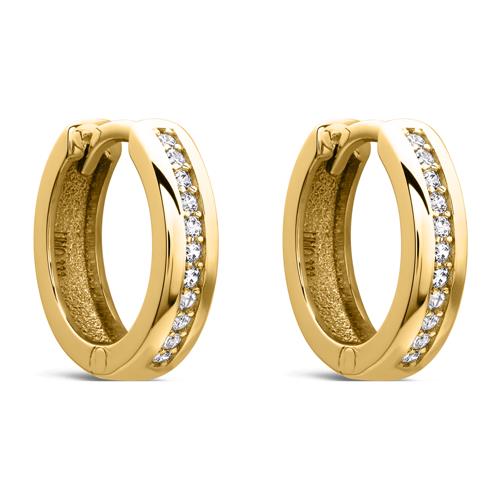
engagement ringsA yellow gold engagement ring set with a diamond, and a white gold wedding ring.

In the British-American tradition, an engagement rings is a rings worn by a woman on her left-hand rings finger indicating her engagement to be married. By modern convention, the rings is usually presented as a betrothal gift by a man to his prospective bride while or directly after she accepts his marriage proposal. It represents a formal agreement to future marriage.

Similar traditions seem to date at least to the ancient Greeks, Romans, and Egyptians. In Rome it was believed that the "vein of love" was located on the fourth finger of the left hand.

In the United States today, it is becoming more common, but still quite rare, that a woman will also buy an engagement or promise rings for her partner at the time of the engagement.

In Brazil, Sweden and Germany, both the man and the woman wear engagement ringss.

In some societies, it is traditional for the engagement rings to cost the equivalent of one month's pay of the man's wages. In the United States, de Beers and some jewelry merchants have promoted a general guideline of two or three months' pay. A spokesperson from Tiffany’s Australia, quoted on the television program A Current Affair (February 1, 2005), suggested that a man should spend two to three month's salary on an engagement rings.

Engagement Rings , Wedding Rings Material and design

Designs of such rings have varied greatly over the years. It traditionally is a precious band, and mounts a diamond or other gem. Current fashions for engagement rings are for a gold, platinum, or silver band with a single diamond. This trend dates from advertising campaigns in the 1940s by de Beers, the world's leading diamond producer.

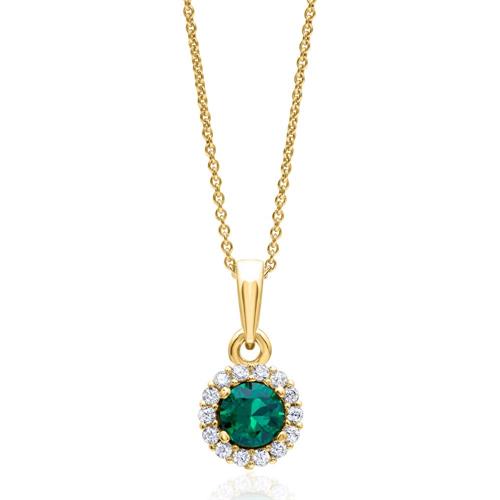
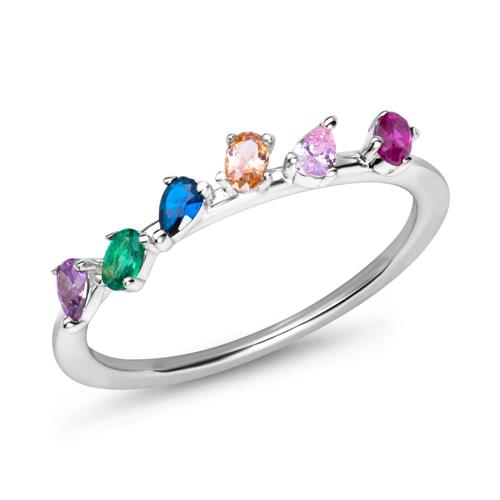
An engagement ring is often intentionally expensive as a sign of a man's permanency. The argument for a diamond is that it is the most enduring, beautiful, and expensive gem. Many women, however, prefer different gems or semiprecious stones to the stark clarity of a diamond. Most of these stones are colored. Sapphires, star sapphires, emeralds, and rubies are often used in engagement rings. Pearls and opals are rare, because these are soft stones.

In some European countries (e.g. Germany), engagement rings are usually plain gold bands without a diamond.

Gold and platinum are recommended by more jewelers, not only because of their inherently higher value, but because they are much more durable than silver. Often a gold or silver ring will employ a platinum setting because it will better protect the stone.

Titanium and stainless steel are becoming more popular because of their lower cost, and because of their strength. These materials allow for a type of setting called a tension setting which is popular because it causes the illusion of a floating stone. Titanium and steel must be milled on a lathe because the temperatures required for proper fabrication are much too high for a small jewellery operation. It should be noted that a titanium ring might cause problems with removal in case of an emergency. Hospital tools are unable to cut some grades of titanium. This titanium ring maker's FAQ contradicts the previous statement. The results of their tests have shown that a manual ring cutter can cut through a ring in under two minutes and electric tools would be faster.

Engagement Rings & Wedding Rings History

The inception of the engagement rings itself can be tied to the Fourth Lateran Council presided over by Pope Innocent III in 1215. Innocent declared a longer waiting period between betrothal and marriage; plain ringss of gold, silver or iron were used earliest. Gems were more than baubles; they were important and reassurings status symbols to the aristocracy. Laws were passed to preserve a visible division of social rank, ensurings only the privileged wore florid jewels. As time passed and laws relaxed, diamonds and other gems became obtainable to the middle class.

At one time, engagement ringss mounted sets of stones. One traditional sentimental pattern mounted six to celebrate the joining of two families: The birthstones of the bride's parents and the bride (on the left), and the birth stones of the groom and his parents (on the right). The parents' stones were mounted with the mother to the left of the father. The bride and groom's birthstones would be adjacent in the center. Another similar pattern, for four stones, mounted the birthstone of the parents' marriages, and the birthstones of the bride and groom. These token ringss often disassembled, to expose a channel in which a lock of the suitor's hair could be treasured.

The first recorded diamond engagement rings was presented by the Archduke Maximillian of Austria to Mary of Burgundy as a betrothal gift in 1477. However, the diamond engagement rings did not become the standard it is considered today until after an extensive marketting campaign by De Beers in the middle of the 20th century.

A Victorian tradition was the Regards rings, in which the initials of the precious gems used spelled out the word 'regards'.

Refusing the gift engagement ring

Women traditionally refuse offers of marriage by refusing to take the offered engagement rings.

In the United States, engagement ringss are considered "conditional gifts" under the legal rules of Property. This is an exception to the general rule that gifts cannot be revoked once properly given. See for example Meyer v. Mitnick, 625 N.W.2d 136 (Michigan, 2001), finding the following reasoning persuasive; "the so-called, "modern trend," holds that because an engagement rings is an inherently conditional gift, once the engagement has been broken the rings should be returned to the donor. Thus, the question of who broke the engagement and why, or who was "at fault," is irrelevant. This is the no-fault line of cases."

A woman who accepts an engagement rings, and then does not marry the man but keeps the rings, is considered grasping and dishonest in some cases, although an alternative argument is that the rings was a gift to which the woman is entitled; because an engagement is also a period for evaluating one's commitment to the relationship, it is not uncommon for either the man or the woman to break off the engagement.

Tradition generally holds that if the betrothal fails because the man pursues other women or himself breaks off the engagement, the woman is not obliged to return the rings. Legally, this condition can be subject to either a modified or a strict fault rule. Under the former, the fiance can demand the return of the rings unless he breaks the engagement. Under the latter, the fiance is entitled to the return unless their actions caused the breakup of the relationship, the same as the traditional approach. However, a no-fault rule is being advanced in some jurisdictions, under which the fiance is always entitled to the return of the rings. The rings only becomes the property of the woman when marriage occurs. An unconditional gift approach is another possibility, wherein the rings is always treated as a gift, to be kept by the fiancee whether or not the relationship progresses to marriage


Engagement Rings